
As part of the Zurich Climate Resilience Alliance, Plan International Vietnam is strengthening flood resilience in Quang Tri by engaging women and youth in inclusive community action planning, improving early warning systems, and building local capacity to shift disaster management from reactive response to proactive resilience.
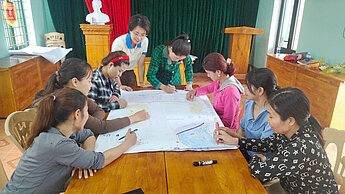
Inclusive Planning for Flood Resilience in Quang Tri, Vietnam
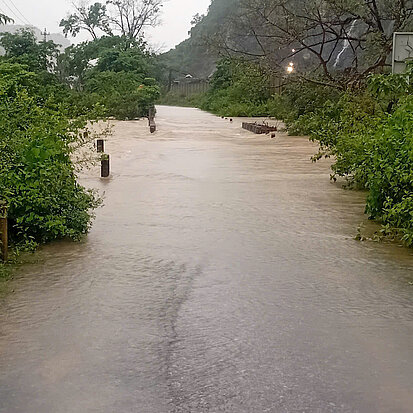
Quang Tri province, in central Vietnam, being a rural environment with a rich agricultural landscape, is highly prone to floods and landslides. As in many countries, disaster planning tends to be reactive, a response launched once flooding has occurred, as opposed to proactive, and working to prevent and mitigate the flood in the first place. As member of the Zurich Climate Resilience Alliance, Plan International Vietnam (Plan Vietnam) is currently working to change this in communities across the province.
One strategy to address this is community action plans, that have been designed by and for the community. They aim to reduce the severity of and mitigate the impacts of a flood through planning, preparedness, and adaptation, as well as lay out the reaction and chain of events when a flood (or another hazard) occurs. The Vietnamese government provides directives and frameworks to local governments, expecting each commune to develop these, but as in so many places, local government officials are overworked, and these can fall by the wayside.
These plans are usually designed by men – women, youth, ethnic minorities, people with disabilities don’t hold a lot of leadership positions and are not usually invited to take part in risk mapping, evacuation planning, or express their needs and offer solutions. When the differing needs and perspectives of these groups are not taken into account, they are left out of the response when the flood hits. They are more likely to incur damage to household, property, and farm, more likely to be injured, more likely to have their livelihoods disrupted.
Shifting from Reaction to Resilience
When community action plans are built with everyone, they work for everyone, and this is exactly what Plan Vietnam is facilitating. The project takes a bottom-up, community-based approach, that is supported by broader systems change efforts at the provincial and national level. Community action plans are a key part of turning the focus to proactive resilience, and ensuring inclusion in planning, decision-making, and response.
Throughout 2025, Plan Vietnam has facilitated participatory workshops across communes, and in seven of these communes, women and youth have been meaningfully engaged. They have been sharing their needs and concerns, their ideas and solutions, and their inputs have been reflected in the updated community action plans. Commune authorities are actively including these groups in the planning process, and integrating their inputs into the plans themselves. These inputs include improvements to early warning systems, increasing capacity and skills for disaster risk response, and enhancing awareness of waste management at the community level. This reflects a tangible shift in institutional attitudes and planning practices towards resilience instead of reaction, and towards broader inclusion.
Behind the Change: Partnerships and Progress
Plan Vietnam played a pivotal role in ensuring this change, by engaging with local governments and Red Cross workers in the entire process, providing tools and training in line with national guidelines and requirements, and incorporating a gender lens into all activities and materials. In cooperation with local natural disaster prevention and control agencies, Plan Vietnam conducted trainings and workshops for commune officials and communities on climate change adaptation, community-based disaster risk management, and national policy and law on disaster risk management (DRM) and climate change resilience. Additionally, they provided community disaster risk assessment tools and training to communes (aligned with national guidance) and facilitated participatory validation.
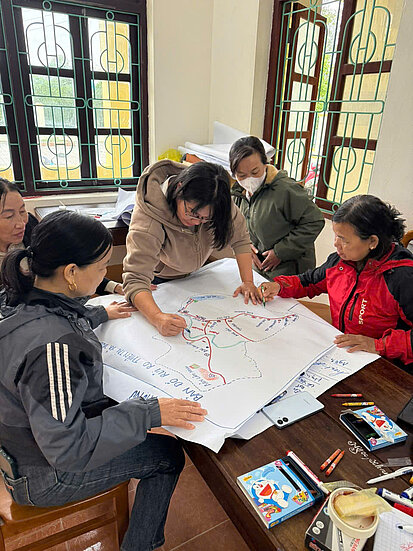
The impact is clear: across ten target communes, 437 participants (including 177 women and 33 girls have engaged in consultations and validation workshops, ensuring that women, youth, and other vulnerable groups directly contributed to identifying local resilience priorities. The voices of women and youth have been integrated into community action plans developed through participatory processes, demonstrating early behavioural and perceptual changes at both community and local government levels. These developments indicate a positive shift in power dynamics, with local leaders increasingly acknowledging women and youth as legitimate actors in resilience planning.
The updated plans now focus on three main priorities: establishing Early Warning Systems for All, promoting Nature-Based Solutions, and enhancing the resilience capacity of commune DRM taskforces. These participatory processes have encouraged local ownership and ensured that resilience-building priorities align with both local needs and national DRM strategies. Next steps will focus on institutionalizing these participatory mechanisms within commune DRM committees and promoting women’s and youth representation in the upcoming Disaster and Climate Resilience Forum.
Why Inclusion Matters for Resilience
This change is significant because it reflects a fundamental shift in whose voices are considered important, heard, and included in community action planning. It demonstrates not just that communities are proactively engaging in flood risk management, but that women and youth are viewed as valuable and possessing of worthy contributions to strengthen the community response overall.
Inclusive planning doesn’t just save lives, it also protects livelihoods, strengthens communities, and builds resilience for the future. Floods will continue to challenge Quang Tri, but with inclusive, proactive planning, communities are better prepared to face the storm together.