
After a workshop bringing together stakeholders from Adamawa and Yobe, delivered by Plan International Nigeria under the Zurich Climate Resilience Alliance, the engagement moved beyond awareness to spark community-led action. This blog explores how participants formed official networks, launched grassroots initiatives, and demonstrated the power of collaboration in strengthening climate resilience at the community level.
From Awareness to Action: Turning Workshops into Community-Led Movements in Nigeria
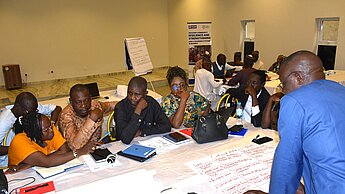
What started as a stakeholder workshop to raise awareness and build connections turned into something extraordinary. Bringing together participants from Adamawa and Yobe states, the workshop didn’t just end with attendance, as the stakeholders took ownership. On their own initiative, they registered as formal groups, launched action plans, and began driving climate resilience efforts that are already reaching local communities. This wasn’t part of the original plan, but it’s proof of what happens when people come together with a shared purpose and mobilise their talents and resources for good.
Laying the Foundation: Inclusive Dialogue and Shared Learning
In February 2025, Plan International Nigeria organised a 5-day workshop in Adamawa and Yobe states. The workshop brought together media and journalists (traditional and social media influencers), national agencies such as the State Emergency Management Agency (SEMA), the National Emergency Management Agency (NEMA), the Nigerian Meteorological Agency (NiMeT), the Ministry of Environment (MOE), the National Orientation Agency (NOA), and academics in the field of climate change.
Participants engaged in participatory sessions that highlighted why integrating gender and inclusion into planning is essential. Academics presented their work on “Climate Change and its Localised Impact in Nigeria Communities”, and “The Role of Journalists and Influencers in Raising Awareness and Strengthening Community Resilience During Climate Hazards”, two highly relevant topics. Government stakeholders shared key insights into their organisations past initiatives, as well as their roles and responsibilities in regard to prevention, mitigation, forecasting, early warning and response. NiMeT also shared annual rainy season forecasting information, equipping participants with critical, actionable data.
Key Insights and Turning Points from the Workshops
The workshop illuminated the crucial dimensions of gender and climate impact. Rose Elishma, a reporter from Adamawa state, reflected: “What women go through as a result of climate change is much. I never saw it from this perspective; I only got to know about it at the workshop.”
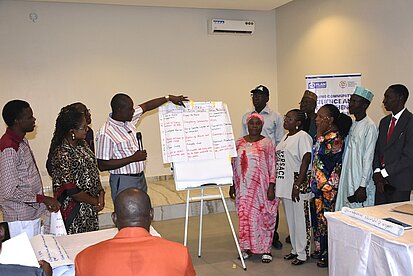
Participants also collaborated on identifying gaps and challenges in building resilience, and drawing out key learnings and takeaways, such as:
- Lack of functional Early Warning Systems, poor attitude toward environmental issues, insufficient climate-related project financing, major infrastructure deficits, unregulated urban expansion, and weak policy implementation were identified as gaps. These are all systems that the climate resilience project aims to address.
- There was a strong consensus on the necessity for robust partnerships, especially with the media, to expand communication channels and effectively disseminate climate-related messages while ensuring they are tailored to diverse community contexts.
- The absolute necessity of prioritizing community involvement and ensuring information is accessible through multiple channels, including local languages, was underscored as essential for effective resilience building.
- Journalists recognized the need to move from solely reactive disaster reporting to engaging in proactive climate change awareness and education.
- Addressing gender stereotypes and integrating gender-sensitive approaches into climate action were identified as vital priorities for inclusive resilience.
The workshop clearly defined a road map for collective actions, as Musa Kollere, a journalist from Yobe state, stated, "This has further fostered a sense of shared responsibility and empowered us to drive the needed change within our respective communities.”
Beyond the Workshop: Networks, Action, and Community Impact
The workshop was intended to be the first step in a lengthy process, to be an initial meeting and capacity-building session bringing key climate stakeholders together. Instead, during this workshop, stakeholders began mobilising themselves and formed official networks. These state-level networks are now officially registered with the Corporate Affairs Commission of Nigeria, granting them legal recognition and enabling formal operations at both state and community levels.
Both the Adamawa State Climate Change Network and the Yobe State Climate Change Network have mobilised and are implementing activities. Journalists and influencers used the information on rainy season forecasting presented by NiMeT and filmed videos, translating the information into common speech and different local languages, which were then shared on their YouTube and Facebook platforms. This reached thousands of people with information enabling them to better plan their planting seasons and know when the rains are expected.
The networks have also fundraised, advocated, and enabled implementation of activities in numerous communities, including tree planting with schools, and awareness campaigns on flooding and waste management.
What happened in Adamawa and Yobe wasn’t just a workshop, it was a spark. A spark that lit up communities, turning awareness sessions into action plans, and strangers into networks with a shared mission. These groups didn’t wait for permission or funding, but instead organised themselves, registered officially, and started making real changes, from translating weather forecasts into local languages to planting trees and educating youth.
This wasn’t in the original playbook, and that’s what makes it so powerful. It shows what’s possible when people come together with a shared purpose and passion. Climate resilience isn’t just a policy, it’s real and tangible and its impacts are borne by the most vulnerable. These climate change networks are harnessing the momentum and the drive, and using it to make impact where it can be felt the most – in communities.